August 12, 2026
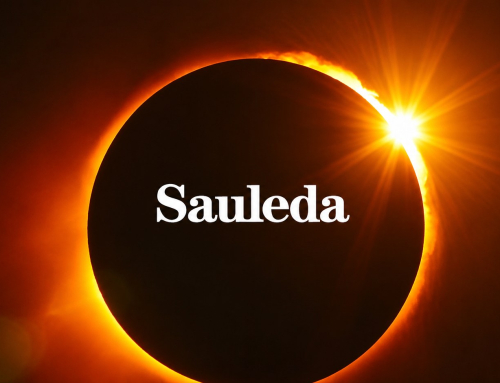
On August 12, 2026, we will be able to enjoy an exceptional astronomical phenomenon: a total solar eclipse visible from various locations in Spain.
A solar eclipse occurs when the Moon passes between the Earth and the Sun, blocking some or all of the light reaching our planet for a few moments. When this alignment occurs, the Moon casts its shadow onto the Earth’s surface and temporarily changes the appearance of the sky.
Although the Sun is much larger than the Moon, the distance between them makes them appear to be similar in size when viewed from Earth. This coincidence allows the Moon, on certain occasions, to completely cover the Sun’s disk, resulting in a total eclipse.
Move the mouse from left to right
Throughout the entire event, the light will change and the surroundings will take on a different atmosphere for a few minutes. It will be an extraordinary moment that will allow us to observe the precision of the universe’s movements and the constant relationship between the Sun, the Moon, and the Earth.
Where will the 2026 solar eclipse be visible?
The total eclipse will be visible in certain areas of Spain. The path of totality will run mainly through the north and west of the peninsula, with particularly good visibility in areas such as Galicia, where it can be observed under the best conditions.
In other parts of the country, it will also be visible as a partial eclipse, with varying degrees of the Sun being obscured depending on the observer's location.
Choose your community
Select a community to see how the eclipse will be visible there.
Total Eclipse
It will be one of the best places to view the total eclipse. It will also be one of the first areas in Spain where the phenomenon will become visible.
Total Eclipse
It will be within the path of totality, offering good conditions for observing the total eclipse of the Sun.
Total Eclipse
You'll be able to enjoy the total eclipse, as this is one of the northern communities with the best visibility.
Total Eclipse
It will be within the path of totality, offering the opportunity to observe the entire eclipse.
Total Eclipse
It will feature areas within the totality path that are particularly favorable for viewing.
Total Eclipse
It will be visible as a total eclipse.
Total Eclipse
Several areas will be within the totality path, although visibility will depend on the specific location.
Total Eclipse
Some areas will be able to see the total eclipse, while others will have less coverage.
Total Eclipse
It will include areas within the totality zone.
Total Eclipse
It will be visible as a total eclipse in part of its territory.
Total Eclipse
Some areas, especially in the interior and the north, will be within the path of totality.
Total eclipse
Certain areas will be able to see the total eclipse.
Total Eclipse
They will also be within the area where the total eclipse can be observed.
Partial eclipse
The eclipse will be visible, although it will not reach totality.
Partial eclipse
It will be visible as a partial eclipse, with the Sun being obscured less the farther south you are.
Partial eclipse
It will be partially visible.
Partial eclipse
The eclipse will be partially visible, with varying degrees of coverage across the peninsula.
To find out exactly what it will look like from each location, we recommend consulting the forecasts and maps prepared by organizations specializing in astronomy.
How to Safely View the Eclipse
Viewing a solar eclipse requires taking precautions. You should never look directly at the Sun without proper protection, as solar radiation can cause damage to your eyesight.
To enjoy the phenomenon safely, it is important to:
01
Use approved glasses specifically designed for viewing solar eclipses.
02
Do not use regular sunglasses, cameras, binoculars, or devices without proper filters.
03
Follow the recommendations of specialized agencies.
04
Plan in advance where you will watch the eclipse.
A solar eclipse is a unique experience, but it should always be enjoyed while taking the necessary safety precautions.
The Value of Shadow
The solar eclipse on August 12, 2026, will be a unique opportunity to observe how the Moon casts its shadow on Earth and, for a few moments, transforms the light of day.
A natural phenomenon that reminds us of the value of shade and its importance to our relationship with the Sun.