There are materials that are such a part of our daily lives that we no longer even notice them. Fabric is one of them.
It protects us from the sun, shelters us, provides comfort, adorns spaces, and is part of the architecture we live in. But fabric can be much more than just a functional element. It can be structure, volume, movement, and expression. It can even become art.
These days, the Reina Sofía Museum in Madrid is hosting a retrospective on Aurèlia Muñoz (Barcelona, 1926–2011), one of the key figures in the renewal of the artistic language of textiles in the 20th century. The exhibition, Aurèlia Muñoz. Entes , spans more than five decades of research on fibers, materials, and textile techniques.
When a fabric is more than just a fabric
Aurèlia Muñoz made textile techniques the focus of her artistic work.
Through embroidery, macramé, and various knotting techniques, her works gradually moved away from the two-dimensional plane to take on volume and occupy space. The fabric thus ceased to be merely a support or decorative element and became the work of art itself.
His knotted structures, large suspended pieces, and well-known kite-birds demonstrate just how much a fiber can be transformed through technique, knowledge of the material, and creativity.
One of his greatest contributions was, in fact, changing the way we view textiles.
For centuries, weaving has been closely linked to practical purposes: to clothe, cover, protect, or decorate. Muñoz drew on those same techniques to demonstrate that threads, knots, and fibers could also create forms, interact with architecture, and transform a space.
Another Way to Understand Fabric
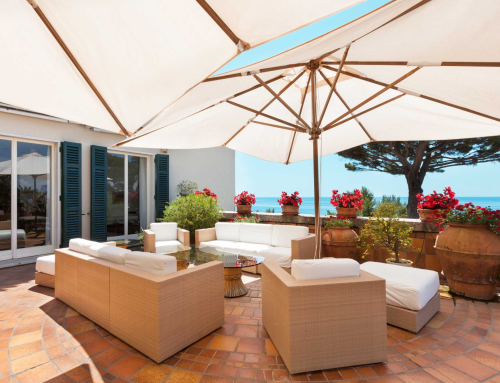
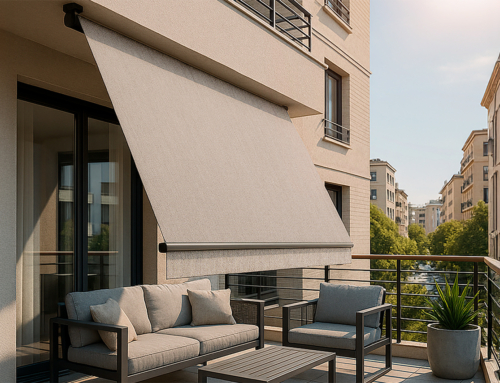
At Sauleda, we have been working with fabrics for over a century, and we have a deep understanding of everything that goes into what may seem like a simple surface: material, structure, technique, texture, color, and behavior.
In our case, this transformation serves a functional purpose: to create fabrics capable of managing light and shade, providing protection, and enhancing the comfort of spaces.
But highlighting the value of the fabric also means looking beyond that function.
It means recognizing the knowledge behind every structure and understanding how a single material can connect industry, design, architecture, craftsmanship, and creativity.
That is why we find it particularly interesting to see this textile on display today in the galleries of one of the leading contemporary art museums.
Aurèlia Muñoz's work reminds us that knitting is also a form of building: building surfaces, volumes, spaces, and new ways of relating to matter.
Perhaps that is precisely where the art of weaving lies.